How to Use Composition and Cues to Guide the Player
First published as The Acagamic Tip Tuesday #1 on acagamic.com. Edited for this archive.
Use artistic composition and environmental cues to guide players smoothly through your game.
In Shadow of the Tomb Raider, the level designers use painted areas to lead the player along walls and through the jungle.
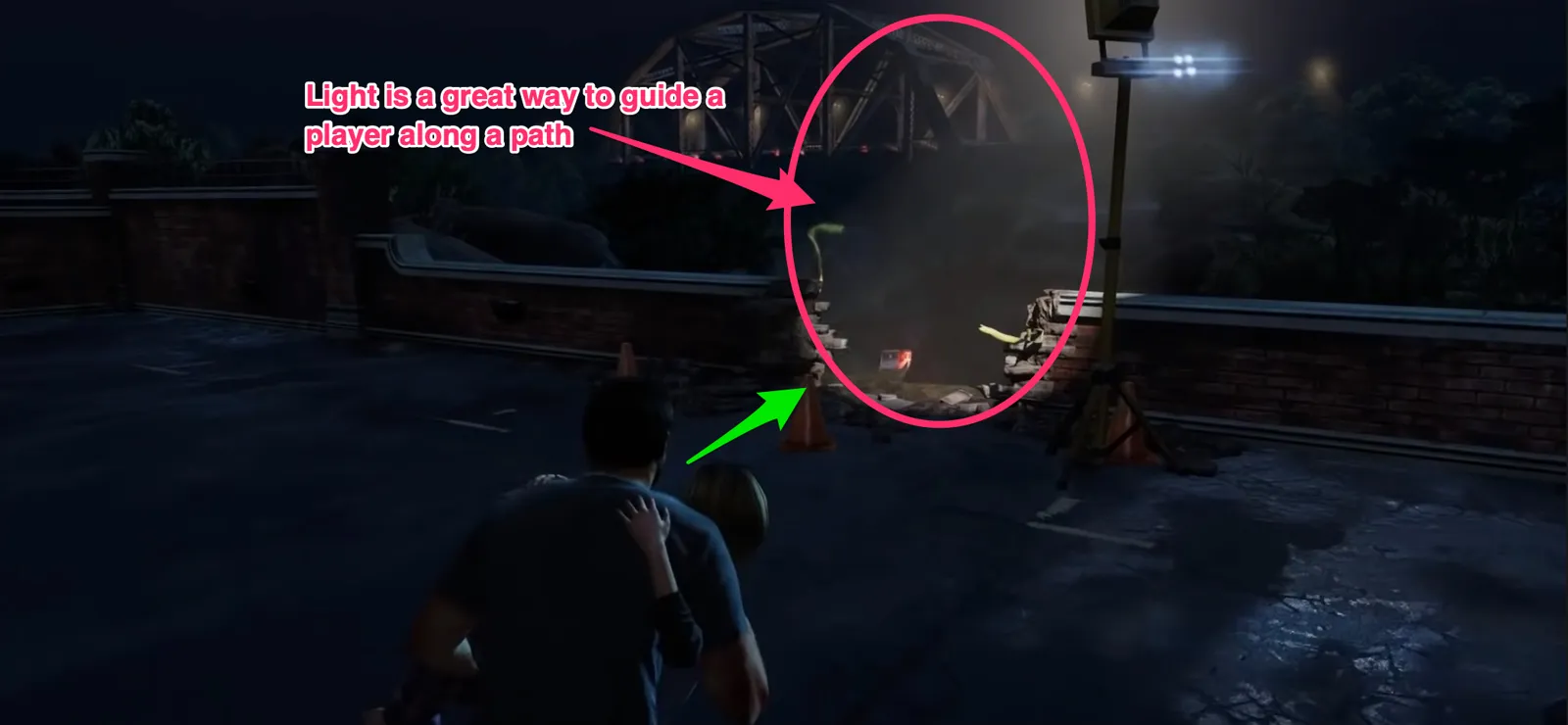
Light is one of the strongest ways to guide players through a level. The Last of Us does this well: shiny objects usually point in the direction the designers want players to go.
The arrangement of prefabs in Uncharted levels always hints at where to go next. In the clip above, the boards and lanterns sit at exactly the right swinging distance.
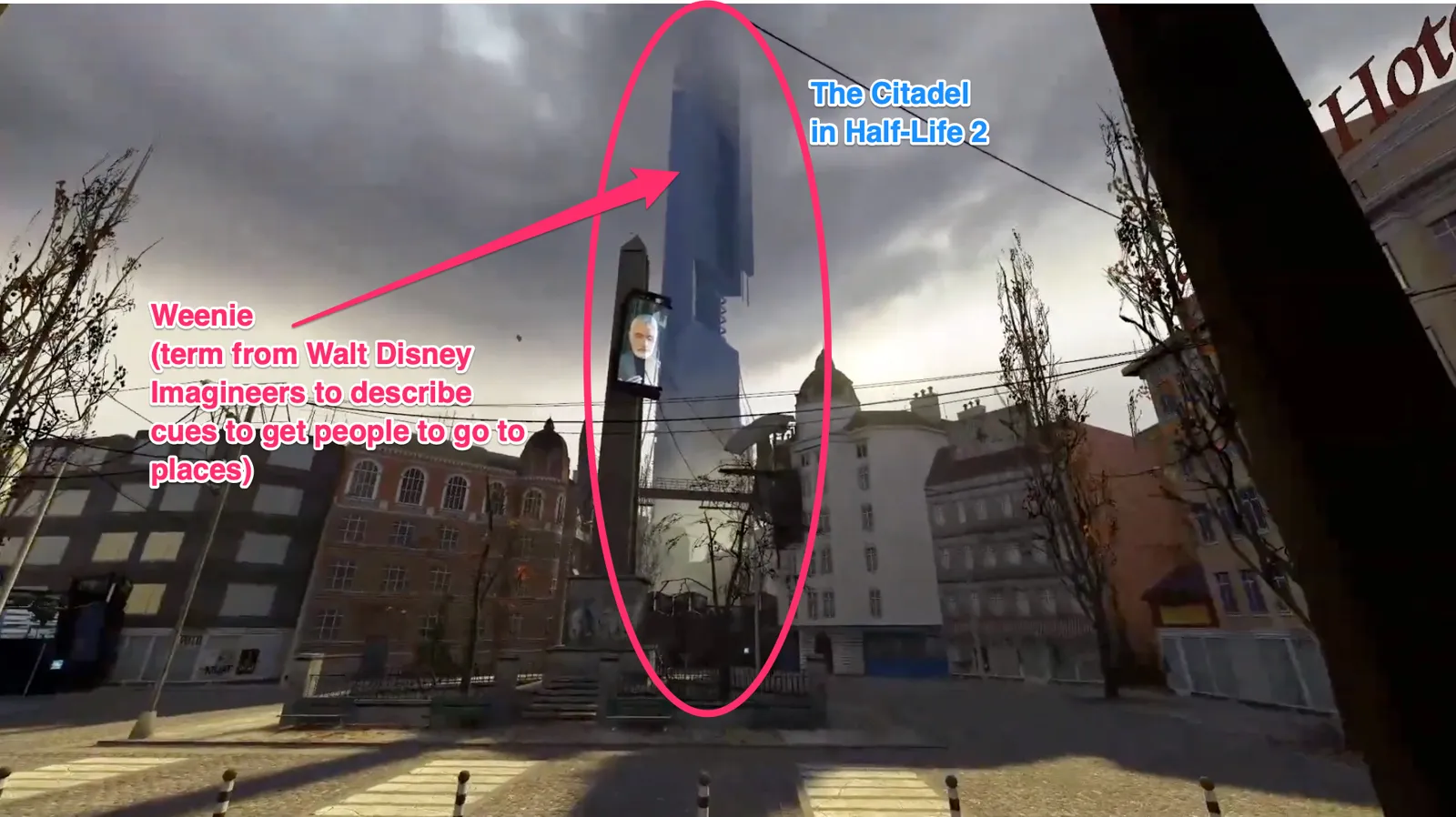
Many games use weenies, a term from Walt Disney Imagineering for distant landmarks that draw people toward them. The Citadel in Half-Life 2 is a famous example. A weenie foreshadows something exciting that the player will reach later, and it keeps them moving toward it.
Bonus video
Enjoy Reading This Article?
Here are some more articles you might like to read next:
- Your Replacement Would Cost $500K
- The 7 psychology principles game designers learn too late
- You’ve normalized something insane about peer review
- How to pick a research problem that actually matters
- Be aware of readers like Warren Buffett. They know something you forgot in sixth grade.
- The AI Responsibility Framework for UX Researchers
- Your Proposal Didn’t Fail. Your Writing Did.
- As a Professor, I Refuse to Store My AI Research in the Cloud
- Your Deep Expertise Is Why Nobody Knows Your Name
- Prompt Engineering Is Your Most Expensive Habit